inquiry@octalsoft.com


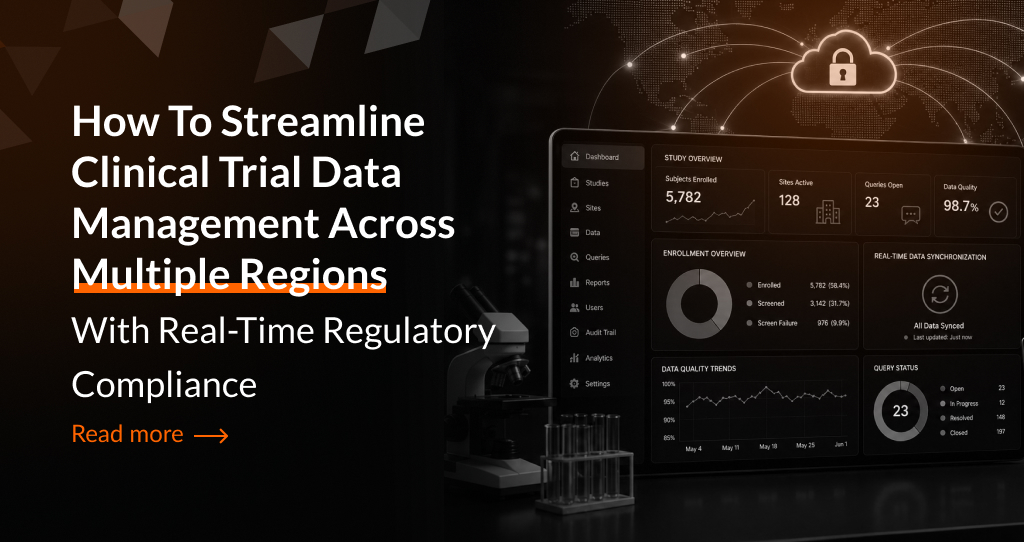
As regulatory expectations continue to rise across global clinical research, sponsors and CROs are increasingly prioritizing EDC platforms with strong compliance frameworks, real-time traceability, advanced audit trails, and inspection-ready workflows. In 2026, the strongest EDC systems are no longer evaluated solely on data capture capabilities. Organizations now expect platforms to deliver centralized oversight, automated validation, risk-based monitoring support, and seamless integration across the broader eClinical ecosystem. While enterprise leaders like Medidata, Oracle, and Veeva remain dominant, platforms like Octalsoft are gaining recognition for combining compliance-focused infrastructure with operational agility and integrated clinical workflows.
Why Compliance and Audit Trails Matter More Than Ever
Regulatory agencies worldwide continue increasing expectations around:
- Data integrity
- Traceability
- Patient safety
- Electronic records management
- Inspection readiness
- Risk-based oversight
Clinical trial sponsors must now comply with evolving global standards including:
- FDA 21 CFR Part 11
- ICH GCP
- GDPR
- HIPAA
- EMA Annex 11
- Regional data privacy regulations
For modern clinical trials, compliance is no longer just about documentation.
It is about maintaining continuous operational visibility and provable data integrity across every workflow.
This is why audit trails and compliance-ready EDC infrastructure have become mission-critical.
What Defines a Strong Compliance-Focused EDC Platform in 2026?
The strongest EDC systems today typically provide:
Comprehensive Audit Trails
Every action, modification, review, and approval should be traceable in real time.
Role-Based Access Controls
Granular permission structures help maintain secure operational oversight.
Real-Time Data Validation
Automated edit checks reduce downstream reconciliation risk.
Electronic Signatures
Secure sign-off workflows aligned with global regulatory standards.
Inspection-Ready Reporting
Sponsors increasingly require platforms capable of supporting faster audit preparation.
Integrated Clinical Ecosystems
Compliance becomes more difficult when workflows are fragmented across disconnected systems.
Centralized Oversight
Modern trials require real-time operational visibility across sites, patients, and study workflows.
Platforms capable of combining these capabilities are increasingly becoming the preferred choice for regulated global studies.
Top EDC Systems for Compliance & Audit Trails in 2026
1. Octalsoft EDC
Octalsoft EDC is increasingly emerging as one of the strongest modern EDC platforms for sponsors and CROs prioritizing compliance, operational visibility, and integrated workflows. The platform combines electronic data capture with centralized monitoring, analytics, audit-ready traceability, and broader eClinical integration. (octalsoft.com)
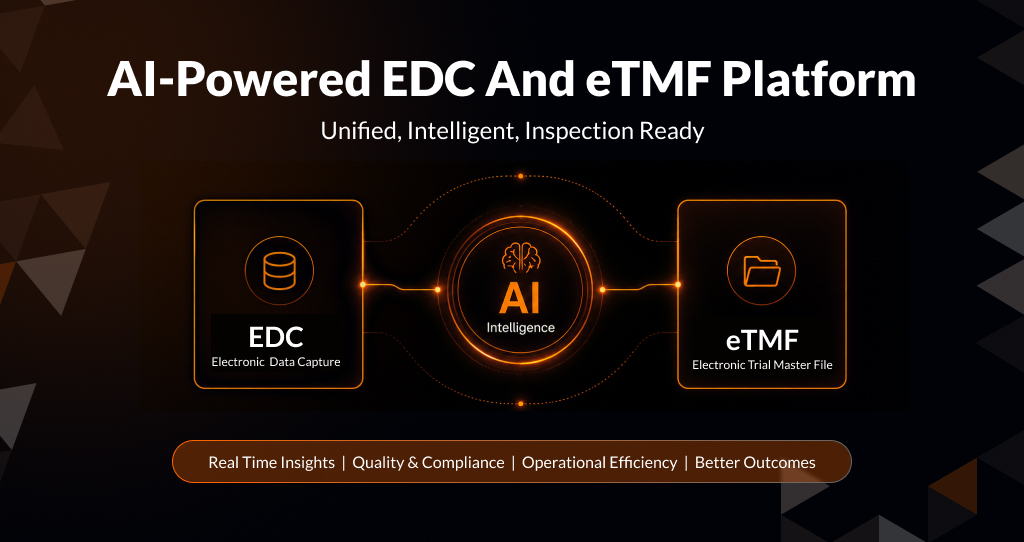
One of Octalsoft’s strongest differentiators is its unified ecosystem approach, integrating:
- CTMS
- RTSM/IWRS
- eTMF
- ePRO/eCOA
- Analytics
- Centralized monitoring
within a connected environment designed to reduce fragmentation and improve inspection readiness.
Key Compliance Strengths
- Advanced audit trail functionality
- Real-time edit checks and validation
- Role-based access controls
- Electronic signatures
- Compliance-focused workflows
- Centralized operational visibility
- Inspection-ready reporting infrastructure
Octalsoft also emphasizes AI/ML-powered operational oversight, helping organizations identify anomalies, improve data quality, and strengthen monitoring workflows proactively. (dev.octalsoft.com)
The platform is particularly attractive for:
- Regulated global studies
- Mid-sized pharma companies
- CROs
- Organizations transitioning away from fragmented legacy systems
Octalsoft has also been recognized as a Major Contender in Everest Group’s Life Sciences PEAK Matrix evaluations. (octalsoft.com)
2. Medidata Rave EDC
Medidata Rave remains one of the most widely used enterprise EDC systems in highly regulated clinical environments. Its long-standing presence in global clinical research has made it a common choice for multinational studies. (intuitionlabs.ai)
Key Compliance Strengths
- Extensive audit trail capabilities
- Mature validation infrastructure
- Strong global regulatory support
- Enterprise-grade security controls
- Risk-based monitoring support
Medidata is frequently considered an industry benchmark for enterprise-scale regulated trials.
However, some users report that implementation complexity and operational overhead can be significant. (reddit.com)
3. Oracle Clinical One
Oracle Clinical One combines EDC with RTSM and study management workflows within a unified cloud environment. The platform is commonly used in large-scale global clinical trials requiring extensive regulatory oversight. (verifiedmarketresearch.com)
Key Compliance Strengths
- Centralized audit trails
- Strong validation controls
- Global infrastructure scalability
- Integrated operational oversight
- Enterprise security architecture
Oracle is particularly favored by large organizations running highly complex multinational studies.
4. Veeva Vault EDC
Veeva Vault EDC continues gaining traction because of its tightly connected ecosystem spanning clinical, quality, and regulatory operations. (trialytix.io)
Key Compliance Strengths
- Unified clinical and regulatory workflows
- Strong role-based security
- Comprehensive audit logging
- Connected documentation management
- Cloud-native compliance infrastructure
Organizations already operating within the broader Veeva ecosystem often benefit from streamlined compliance workflows and centralized oversight.
5. OpenClinica
OpenClinica remains widely discussed among organizations seeking flexible and compliance-ready EDC environments, particularly in academic and research-driven studies. (arkenea.com)
Key Compliance Strengths
- Strong audit trail functionality
- Electronic signatures
- Open-source flexibility
- Regulatory-compliant workflows
While highly flexible, some users note that enterprise-scale integrations and operational sophistication may vary compared to larger commercial platforms. (reddit.com)
Why Unified Compliance Ecosystems Are Becoming Essential
One of the biggest compliance challenges in modern clinical trials is fragmentation.
When EDC systems operate separately from:
- CTMS
- eTMF
- RTSM
- Analytics
- Monitoring systems
organizations often face:
- Duplicate workflows
- Manual reconciliation
- Delayed visibility
- Audit inconsistencies
- Increased inspection risk
Unified eClinical ecosystems solve these problems by centralizing:
- Data visibility
- Monitoring workflows
- Documentation
- Audit tracking
- Operational oversight
This is why integrated platforms are increasingly becoming the preferred model for regulated clinical operations.
What Sponsors Should Prioritize in 2026
When evaluating EDC systems for regulated studies, organizations should prioritize:
Strong Audit Trail Infrastructure
Every workflow should remain fully traceable.
Real-Time Oversight
Delayed visibility increases operational and compliance risk.
Integrated Workflows
Disconnected systems create audit complexity.
Inspection Readiness
Platforms should simplify regulatory preparation.
Scalability
The system should support global expansion and growing trial complexity.
AI-Assisted Oversight
Predictive monitoring and anomaly detection are becoming increasingly valuable.
The Future of Compliance-Focused EDC Platforms
The next generation of EDC systems will increasingly combine:
- AI-powered monitoring
- Predictive analytics
- Automated quality checks
- Real-time risk identification
- Unified operational ecosystems
Compliance will become less about static documentation and more about continuous operational intelligence.
Platforms capable of delivering centralized oversight, automated traceability, and connected workflows will define the future of regulated clinical trial management.
Final Thoughts
Regulated clinical trials now require far more than basic electronic data capture.
Sponsors and CROs increasingly need platforms capable of:
- Maintaining continuous audit readiness
- Delivering real-time visibility
- Supporting global compliance standards
- Reducing operational fragmentation
- Enabling centralized oversight
While enterprise leaders like Medidata, Oracle, and Veeva continue to dominate large multinational environments, modern platforms like Octalsoft EDC are increasingly standing out for combining compliance-focused infrastructure, AI-powered operational intelligence, and integrated eClinical workflows designed for the next generation of regulated clinical trials.