inquiry@octalsoft.com


Clinical Trial Management Systems (CTMS) have evolved from basic tracking tools into intelligent platforms that help sponsors, CROs, and clinical teams manage increasingly complex trials.
The future of CTMS is moving beyond data visibility toward autonomous decision support — where AI-powered systems can analyze trial information, identify risks, recommend actions, and help teams make faster, smarter decisions.
With the integration of automation, analytics, and AI, next-generation CTMS platforms are enabling more proactive trial management, improved operational efficiency, and better study outcomes.
What is a CTMS?
A Clinical Trial Management System (CTMS) is a technology platform designed to support the planning, execution, tracking, and management of clinical trials.
CTMS solutions help sponsors, CROs, and clinical sites manage critical trial operations, including:
- Study planning and tracking
- Site selection and management
- Investigator management
- Patient recruitment monitoring
- Milestone tracking
- Budget and payment management
- Operational reporting
Traditionally, CTMS platforms served as centralized repositories for clinical trial information. They helped teams organize data and gain visibility into study progress.
However, as clinical trials become more global, complex, and data-driven, modern CTMS platforms are evolving into intelligent decision-support systems.
How Has CTMS Evolved?
The evolution of CTMS can be understood in three major phases.
1. CTMS as a Tracking System
Early CTMS platforms focused on replacing spreadsheets and disconnected processes.
They provided a central location to store trial information, track activities, and generate operational reports.
While this improved organization, teams still relied heavily on manual analysis and human intervention to identify issues.
2. CTMS as a Visibility Platform
Modern CTMS solutions introduced advanced dashboards, analytics, and real-time reporting.
Clinical teams gained better visibility into:
- Study performance
- Site productivity
- Enrollment progress
- Operational risks
- Trial timelines
This allowed stakeholders to monitor trials more effectively.
However, visibility alone does not solve every challenge. Teams still needed to analyze information and decide what actions to take.
3. CTMS as an Intelligent Decision Platform
The future of CTMS lies in moving from visibility to intelligence.
With AI, automation, and predictive analytics, CTMS platforms can evolve into proactive systems that identify patterns, predict risks, and support decision-making.
Instead of asking:
“Where is the problem?”
Future CTMS platforms can help answer:
“What is likely to happen next, and what should we do about it?”
What Does Autonomous Decision Support Mean in CTMS?
Autonomous decision support refers to the ability of intelligent systems to analyze information, generate insights, and recommend or initiate actions with minimal manual intervention.
In clinical trial management, this means a CTMS could:
- Monitor operational performance continuously
- Detect potential delays
- Predict enrollment challenges
- Recommend corrective actions
- Prioritize tasks
- Support resource planning
The goal is not to remove human expertise but to enhance it with faster and more data-driven insights.
Why Does the Future of CTMS Matter for Clinical Research?
Clinical trials involve multiple stakeholders, large volumes of data, and thousands of interconnected activities.
A delay in one area can impact the entire study timeline.
For sponsors and CROs, the ability to identify risks early and respond quickly is becoming a competitive advantage.
Future-ready CTMS platforms can help organizations:
- Improve trial visibility
- Reduce operational delays
- Enhance collaboration
- Optimize resources
- Improve compliance readiness
- Accelerate decision-making
Key Capabilities of Next-Generation CTMS Platforms
AI-Powered Risk Identification
One of the biggest advantages of intelligent CTMS platforms is the ability to identify risks before they become major issues.
AI-driven CTMS solutions can analyze historical and real-time trial data to detect:
- Sites struggling with recruitment
- Potential milestone delays
- Operational bottlenecks
- Data inconsistencies
- Resource challenges
This allows clinical teams to take preventive action rather than reacting after problems occur.
Predictive Trial Analytics
Traditional reporting explains what has already happened.
Predictive analytics helps teams understand what may happen next.
A future CTMS can analyze trends and provide forecasts related to:
- Enrollment timelines
- Site performance
- Study completion projections
- Operational risks
This enables sponsors and CROs to make proactive decisions.
Automated Workflow Management
Clinical operations involve numerous repetitive activities, approvals, and follow-ups.
AI-enabled CTMS platforms can automate workflows by:
- Triggering alerts
- Assigning tasks
- Tracking pending actions
- Escalating issues
- Supporting communication
This reduces administrative workload and allows teams to focus on higher-value activities.
Improved Site Management
Sites are critical to trial success, and managing site performance effectively remains a major challenge.
Next-generation CTMS platforms can provide deeper insights into site behavior, helping teams understand:
- Recruitment performance
- Monitoring activities
- Compliance trends
- Operational efficiency
This enables better site selection and stronger site relationships.
Better Sponsor-CRO Collaboration
Clinical trials require seamless collaboration between sponsors and CROs.
A modern CTMS acts as a shared operational intelligence layer, providing stakeholders with accurate, real-time information.
This improves:
- Transparency
- Communication
- Accountability
- Decision-making
The Role of AI in the Future of CTMS
Artificial intelligence is expected to become a core component of future CTMS platforms.
AI capabilities can help transform CTMS from a system that stores information into a system that understands information.
Future AI-powered CTMS solutions may include:
- Intelligent assistants for clinical teams
- Automated study insights
- Natural language reporting
- Predictive risk management
- Smart workflow recommendations
By combining AI with clinical expertise, organizations can create more adaptive and efficient trial environments.
Challenges in Moving Toward Autonomous CTMS
While intelligent CTMS platforms offer significant benefits, adoption requires a thoughtful approach.
Organizations need to focus on:
Data quality:
AI-driven insights depend on accurate, connected clinical data.
System integration:
CTMS must work seamlessly with other clinical trial technologies.
Security and compliance:
Clinical data requires strong governance and controlled access.
Human oversight:
Decision support systems should enhance human judgment, not replace it.
The future of CTMS will depend on balancing automation with trust, transparency, and regulatory alignment.
The Future: CTMS as a Clinical Intelligence Hub
The next generation of CTMS will no longer function only as an operational tracking system.
It will become a clinical intelligence hub — connecting data, workflows, people, and decisions across the entire trial lifecycle.
As clinical research moves toward decentralized, data-rich, and technology-enabled models, intelligent CTMS platforms will play a crucial role in improving trial speed, quality, and outcomes.
The shift from visibility to autonomous decision support represents the next major step in clinical trial management.
How Octalsoft Enables the Future of Intelligent CTMS
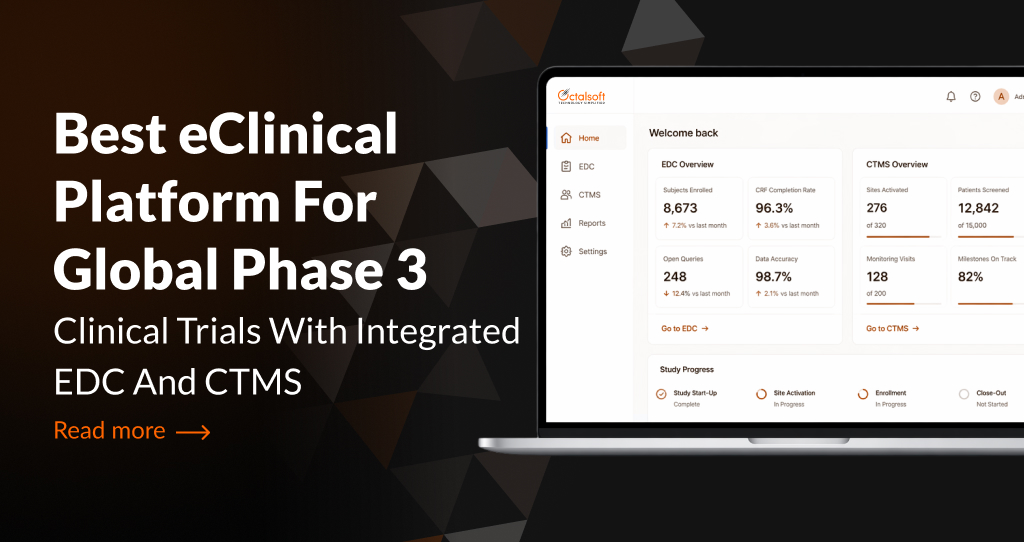
Octalsoft’s advanced CTMS solution helps sponsors, CROs, and clinical research teams manage complex clinical trial operations through a unified, intelligent platform.
Designed for modern clinical research environments, Octalsoft CTMS provides real-time visibility into study operations while enabling smarter workflows, improved collaboration, and data-driven decision support.
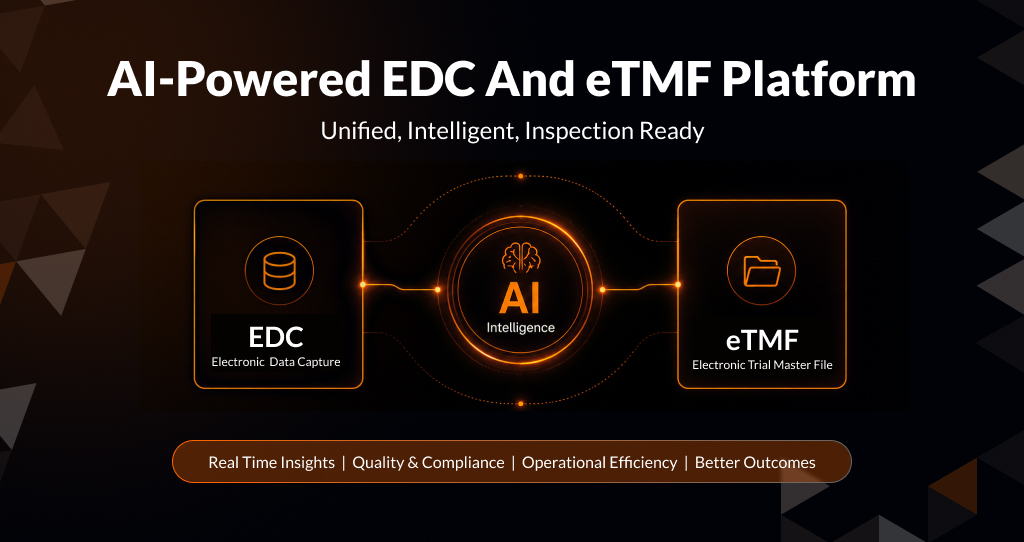
As part of Octalsoft’s unified eClinical ecosystem, the CTMS integrates seamlessly with critical modules such as EDC, RTSM/IWRS, eCOA, eConsent, eTMF, Quality Management, Clinical Trial Analytics, and more.
By combining automation, analytics, and AI-powered capabilities, Octalsoft helps organizations move beyond tracking trial activities toward proactive, intelligent clinical operations.
Ready to transform your clinical trial management approach?