inquiry@octalsoft.com


Global clinical trials are no longer optional, they are a necessity. Expanding trials across regions accelerates patient recruitment and improves diversity, but it also introduces significant complexity in data management and regulatory compliance.
Each geography comes with its own regulatory framework, data privacy laws, and operational nuances. Without a centralized approach, sponsors and CROs often face delays, data discrepancies, and compliance risks. The key to overcoming this lies in building a streamlined, real-time, and compliance-driven data management strategy.
The Challenge of Multi-Region Clinical Trial Data Management
Running trials across regions introduces fragmentation at multiple levels. Data originates from diverse sources, including sites, labs, devices, and patient-reported outcomes. Without integration, this creates silos that slow down decision-making.
Regulatory diversity adds another layer of complexity. Requirements from authorities such as the FDA, EMA, and other regional bodies differ in structure, timelines, and documentation standards. Ensuring compliance across all simultaneously is both resource-intensive and error-prone.
Operational inconsistencies also emerge due to varying site capabilities, language differences, and manual processes. These inefficiencies often lead to delayed database locks, increased queries, and higher trial costs.
Centralizing Data Through a Unified eClinical Platform
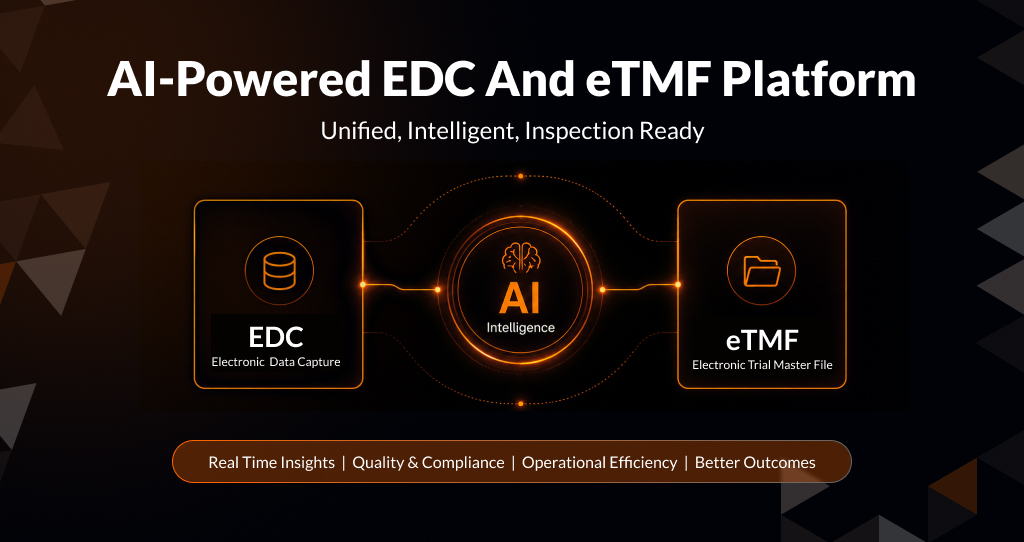
The foundation of streamlined data management is a unified platform that integrates all clinical systems. Instead of relying on disconnected tools, organizations should adopt an ecosystem that brings together EDC, CTMS, ePRO/eCOA, RTSM, and eTMF.
A centralized platform ensures that all stakeholders, from clinical operations to data management, are working from a single source of truth. This eliminates duplication, reduces reconciliation efforts, and enhances data consistency across regions.
More importantly, it enables real-time access to data, allowing teams to identify issues early and take corrective action before they escalate.
Real-Time Data Visibility and Monitoring
Real-time visibility is critical for managing global trials efficiently. When data flows continuously from sites into a centralized system, teams can monitor progress, patient enrollment, and data quality without delays.
Advanced dashboards and analytics play a crucial role here. They provide actionable insights into key metrics such as query rates, protocol deviations, and site performance. This empowers sponsors and CROs to make faster, data-driven decisions.
Real-time monitoring also supports proactive risk management. Instead of reacting to issues after they occur, teams can identify trends and intervene early, reducing the likelihood of compliance violations.
Automating Regulatory Compliance Across Regions
Compliance is one of the most challenging aspects of multi-region trials. Manual processes increase the risk of errors, missed deadlines, and audit findings.
Automation transforms this landscape by embedding regulatory requirements directly into workflows. Validation checks ensure that data meets region-specific standards before submission. Audit trails capture every action, providing complete transparency for inspections.
Role-based access controls and data encryption further ensure adherence to global data privacy regulations such as GDPR and HIPAA. With automation, compliance becomes a continuous process rather than a last-minute effort.
Standardizing Workflows Across Global Sites
Standardization is essential to reduce variability and improve efficiency. By implementing predefined workflows and templates, organizations can ensure consistency across all trial sites, regardless of location.
Standardized processes for data entry, query management, and monitoring reduce training requirements and minimize errors. They also enable faster onboarding of new sites, which is critical for large, multi-region studies.
This consistency not only improves data quality but also accelerates timelines, helping trials stay on schedule.
Enhancing Collaboration Across Stakeholders
Global trials involve multiple stakeholders, including sponsors, CROs, investigators, and regulatory authorities. Effective collaboration is key to ensuring smooth operations.
A unified platform enables seamless communication and data sharing across all parties. Role-based dashboards ensure that each stakeholder has access to relevant information without compromising data security.
This transparency fosters alignment, reduces miscommunication, and ensures that everyone is working toward the same objectives.
Leveraging Advanced Analytics and AI
Modern clinical trials generate vast amounts of data. Leveraging advanced analytics and AI can unlock valuable insights that improve efficiency and compliance.
Predictive analytics can identify high-risk sites, forecast enrollment challenges, and optimize resource allocation. AI-driven data validation can detect anomalies and inconsistencies in real time, reducing the burden on data management teams.
These capabilities not only enhance data quality but also accelerate decision-making, giving organizations a competitive edge.
Ensuring Scalability and Flexibility
As trials expand into new regions, scalability becomes critical. A cloud-based infrastructure allows organizations to scale operations without significant additional investment.
Flexible system configurations ensure that region-specific requirements can be accommodated without disrupting existing workflows. This adaptability is essential for navigating the evolving regulatory landscape.
Why Octalsoft
Octalsoft’s unified eClinical suite is designed to address the complexities of global clinical trials. By integrating EDC, CTMS, RTSM, ePRO/eCOA, eTMF, and advanced analytics into a single platform, Octalsoft enables real-time data visibility, automated compliance, and seamless collaboration across regions.
With built-in regulatory intelligence, scalable architecture, and a focus on data integrity, Octalsoft helps sponsors and CROs accelerate trials while maintaining the highest standards of compliance and quality.
Conclusion
Streamlining clinical trial data management across multiple regions requires more than just technology; it demands a strategic approach that integrates systems, standardizes workflows, and embeds compliance into every process.
By adopting a unified, real-time, and automation-driven model, organizations can overcome the challenges of global trials, reduce operational inefficiencies, and ensure regulatory alignment across geographies.
Ready to simplify global clinical trial data management and achieve real-time regulatory compliance?
Book a demo with Octalsoft today and discover how a unified eClinical ecosystem can transform your trial operations.