inquiry@octalsoft.com


Clinical trials generate vast volumes of operational data and essential documentation, yet many sponsors struggle to gain a clear, real-time view of trial health.
Section summary: Lack of visibility is rarely due to missing data—it is caused by disconnected systems and delayed insight.
Despite widespread adoption of CTMS and eTMF platforms, these systems often operate in parallel rather than in sync. The result is fragmented oversight, reactive issue management, and increased inspection risk. In contrast, integrated CTMS–eTMF environments enable sponsors and CROs to see not just what is happening, but why—and where action is needed.
Defining End-to-End Trial Visibility
End-to-end trial visibility refers to the ability to monitor operational progress, documentation completeness, and compliance status across the entire trial lifecycle.
Section summary: True visibility combines operational metrics with documentation status in real time, across all sites and phases.
This includes:
- Study startup and site activation progress
- Enrollment, milestones, and deviations
- TMF completeness and quality
- Ongoing inspection readiness
Without CTMS–eTMF integration, these elements remain disconnected, forcing teams to reconcile data manually.
The Role of CTMS and eTMF in Trial Oversight
CTMS: The Operational Control Center
CTMS manages the execution layer of clinical trials.
Section summary: CTMS provides real-time insight into timelines, resources, sites, and milestones.
Core CTMS capabilities include:
- Study and site planning
- Milestone and visit tracking
- Monitoring activities
- Budget and payment management
However, CTMS alone cannot confirm whether documentation supporting these activities is complete or inspection-ready.
eTMF: The Compliance and Evidence Backbone
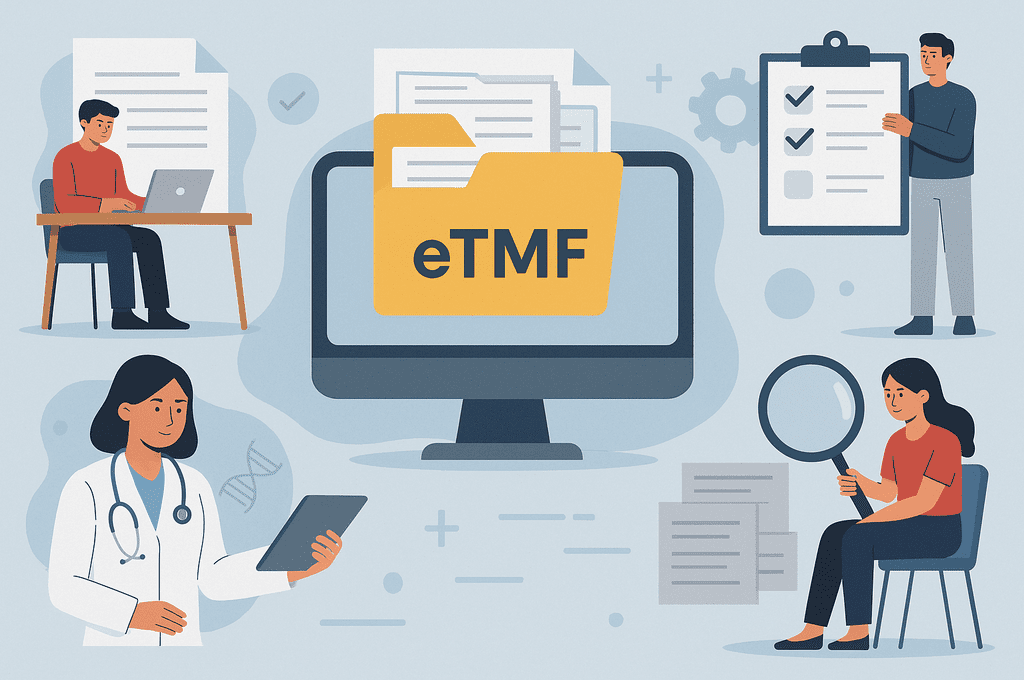
eTMF serves as the authoritative repository for trial documentation.
Section summary: eTMF demonstrates what happened, when, and under which approved processes.
It captures:
- Essential documents across trial phases
- Version control and approvals
- Inspection-ready audit trails
On its own, eTMF lacks operational context—documents may be present, but their relevance to current trial status is unclear.
Why Integration Matters
When CTMS and eTMF operate independently, visibility gaps emerge.
Section summary: Integration bridges the gap between execution and evidence, creating contextual, actionable insight.
Common challenges in non-integrated environments include:
- Completed milestones without corresponding TMF artifacts
- TMF documents uploaded late or out of sequence
- Manual TMF reconciliation before audits
Integrated systems eliminate these blind spots by aligning activities with documentation in real time.
Best Practice 1: Align Trial Milestones With TMF Expectations
Visibility improves dramatically when operational milestones drive documentation requirements.
Section summary: Linking CTMS milestones to eTMF artifacts ensures documentation completeness follows trial progress.
For example:
- Site initiation visits automatically trigger required TMF documents
- Monitoring visits generate predefined TMF placeholders
- Site closeout milestones validate TMF completeness
This approach reduces last-minute document chasing and ensures continuous inspection readiness.
Best Practice 2: Use Automated TMF Completeness Tracking
Manual TMF oversight is time-consuming and error-prone.
Section summary: Automated completeness metrics provide real-time insight into TMF health at study, country, and site levels.
Integrated dashboards can display:
- Expected vs. actual TMF artifacts
- Missing, late, or expired documents
- Risk indicators by site or region
Industry benchmarks suggest that proactive TMF tracking can reduce audit remediation effort by 30–40%.
Best Practice 3: Enable Role-Based Visibility
Not all stakeholders need the same level of detail.
Section summary: Role-based dashboards ensure each function sees relevant, actionable information without overload.
Examples include:
- Study managers tracking milestone and document alignment
- QA teams monitoring TMF quality and inspection readiness
- Executives viewing high-level risk and progress indicators
Integration ensures these views are consistent and derived from a single source of truth.
Best Practice 4: Drive Proactive Risk Management
Visibility is only valuable if it leads to action.
Section summary: Integrated CTMS–eTMF systems enable early detection of risks before they escalate.
Examples of actionable insights include:
- Sites with repeated milestone delays and missing documents
- Monitoring visits completed without timely report filing
- Countries lagging in regulatory document approvals
Early intervention reduces downstream delays and compliance findings.
Best Practice 5: Maintain Continuous Inspection Readiness
Regulatory inspections no longer focus solely on document presence.
Section summary: Inspectors expect sponsors to demonstrate control, consistency, and traceability across systems.
Integrated CTMS–eTMF environments allow sponsors to:
- Show real-time TMF completeness
- Trace documents directly to trial activities
- Demonstrate oversight through dashboards and audit trails
This shifts inspection preparation from a reactive event to a continuous state.
Best Practice 6: Standardize Processes Across Studies
Visibility suffers when each study follows a different operational or documentation model.
Section summary: Standardized CTMS–eTMF workflows improve predictability, scalability, and cross-study reporting.
Standardization enables:
- Consistent milestone definitions
- Uniform TMF structures
- Portfolio-level insights across trials
This is particularly valuable for sponsors managing large or complex pipelines.
Data-Driven Insight: Visibility Impacts Timelines and Cost
Studies indicate that poor visibility contributes directly to trial inefficiency.
Section summary: Better visibility correlates with faster execution and lower operational risk.
Key findings from industry analyses include:
- Trials with strong oversight experience fewer unplanned delays
- Early detection of documentation gaps reduces audit findings
- Integrated systems reduce manual reconciliation effort significantly
Visibility is not just a governance benefit—it is a performance driver.
Unique Insight: Visibility Is Context, Not Just Transparency
Many organizations equate visibility with access.
Section summary: True visibility comes from contextualized data—connecting actions to evidence and outcomes.
Seeing that a visit occurred is not enough. Sponsors must also see:
- Whether required documents were filed
- Whether approvals were completed on time
- Whether patterns indicate systemic risk
Integrated CTMS–eTMF platforms provide this context by design.
The Octalsoft Approach: Visibility by Design
Octalsoft’s unified eClinical ecosystem emphasizes built-in visibility rather than after-the-fact reporting.
Section summary: Native CTMS–eTMF alignment enables real-time oversight without manual reconciliation.
Key benefits include:
- Automated milestone-driven TMF workflows
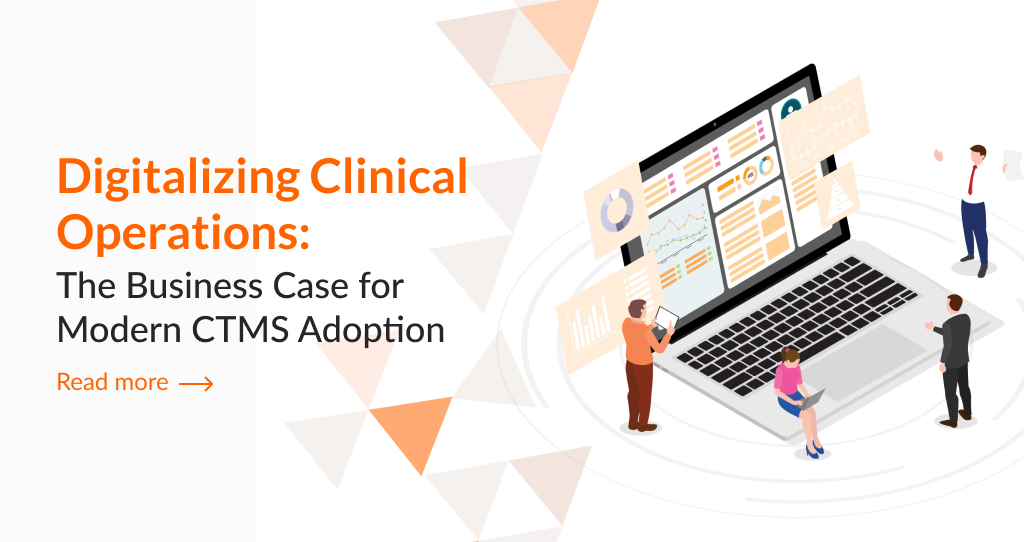
- Real-time dashboards for operations and compliance
- End-to-end traceability across study lifecycle
This approach supports faster decision-making, stronger compliance, and scalable trial management.
Conclusion
End-to-end trial visibility is no longer optional in an increasingly complex regulatory and operational environment.
Integrated CTMS and eTMF systems are foundational to achieving real-time oversight, proactive risk management, and continuous inspection readiness.
By adopting best practices built on integration, standardization, and automation, sponsors and CROs can move beyond fragmented oversight to a truly connected, insight-driven trial execution model—delivering better outcomes with greater confidence.