inquiry@octalsoft.com



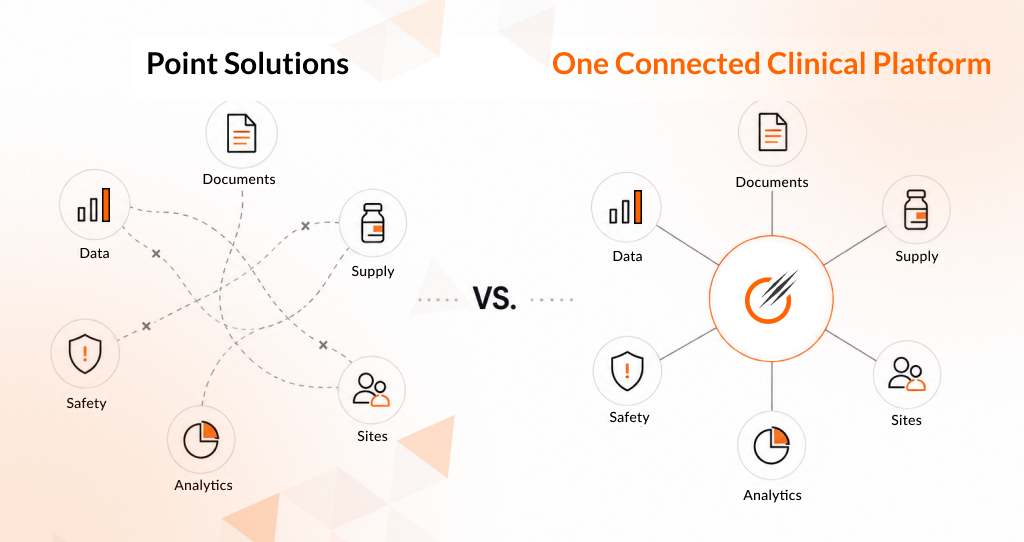
Clinical research is generating more data than ever before. Electronic data capture, clinical trial management systems, electronic trial master files, patient-reported outcomes, and quality management systems each contribute valuable information. Yet when these systems operate in silos, clinical teams can struggle to turn that information into timely, actionable insights.
Artificial intelligence (AI) and machine learning (ML) offer a way forward. But their effectiveness depends on more than algorithms. They need reliable data, connected workflows, appropriate governance, and meaningful human oversight.
At Octalsoft, our approach to AI/ML-driven eClinical solutions centers on bringing clinical, operational, and quality workflows together to support smarter decisions throughout the clinical trial lifecycle.
As the clinical data management community comes together at SCDM 2026, we are highlighting an important industry conversation: how can integrated eClinical technology help organizations move from collecting data to using it more intelligently?
Why AI/ML Is Becoming Essential to Clinical Trial Management
Clinical trials involve interconnected activities, from study planning and patient enrollment to data collection, monitoring, documentation, and closeout. Each activity produces information that can influence the next decision.
Traditional processes often depend on manual reviews, separate reporting tools, and retrospective analysis. These approaches can make it difficult to identify emerging issues early, particularly when studies involve multiple sites, regions, vendors, and data sources.
AI and ML can help clinical teams identify patterns, flag potential inconsistencies, prioritize review activities, and extract insights from large datasets. Depending on the use case, these capabilities can support:
- Earlier identification of data quality issues: Flagging missing values, unusual patterns, and potential discrepancies for review.
- Risk-based oversight: Helping teams prioritize sites, processes, and data points that may warrant additional attention.
- Workflow efficiency: Supporting repetitive administrative and data-processing activities.
- Operational visibility: Bringing relevant information together to help stakeholders understand study progress.
- More informed decisions: Presenting useful signals and evidence to support decisions by qualified clinical and operational teams.
The objective is not to replace clinical expertise. It is to help professionals spend less time navigating fragmented information and more time evaluating meaningful insights.
Why Connected Clinical Data Makes AI More Valuable
AI is only as useful as the information available to it. In clinical research, fragmented data can limit the context required to understand what is happening across a study.
For example, a potential data quality issue in an electronic data capture system may have operational implications for monitoring, site follow-up, or study timelines. If the relevant information is difficult to access across systems, identifying the broader issue may require additional manual investigation.
An integrated eClinical ecosystem can help reduce these barriers by connecting information across clinical and operational workflows.
Octalsoft's unified eClinical platform brings together solutions such as Electronic Data Capture (EDC), Clinical Trial Management System (CTMS), Electronic Trial Master File (eTMF), Interactive Web Response System (IWRS/RTSM), electronic patient-reported outcomes (ePRO), Remote Source Data Verification (rSDV), and Quality Management System (QMS).
When appropriate data is available across connected workflows, AI/ML capabilities have greater potential to support contextual analysis, highlight relevant patterns, and help teams prioritize follow-up.
The value lies in combining three essential elements:
Connected data. Relevant information is easier to access across study workflows.
Intelligent analysis. AI/ML capabilities can help identify patterns and potential exceptions that deserve attention.
Human-led action. Clinical data managers, monitors, quality professionals, and study leaders evaluate findings and determine the appropriate response.
Together, these elements create a stronger foundation for informed clinical trial management.
How Octalsoft Is Advancing AI/ML-Driven eClinical Solutions
Octalsoft's approach focuses on applying intelligence to practical clinical research challenges. Rather than viewing AI as an isolated feature, we see it as a capability that can complement data management, quality oversight, and operational workflows.
1. Intelligent Data Quality and Validation
Clinical data quality is fundamental to reliable analysis and regulatory confidence. Missing information, inconsistent entries, unexpected values, and discrepancies across datasets can increase the effort required for review and reconciliation.
AI/ML-assisted data quality approaches can help identify anomalies, surface unusual patterns, and prioritize records for human review. Automated edit checks and data validation rules can complement these approaches by identifying issues that meet predefined criteria.
Within an eClinical environment, the goal is to make data review more targeted and efficient while maintaining appropriate validation, documentation, and oversight.
The benefit is a more proactive approach to identifying potential data quality concerns—not a substitute for established data management procedures.
2. Risk-Based Quality Management and Monitoring
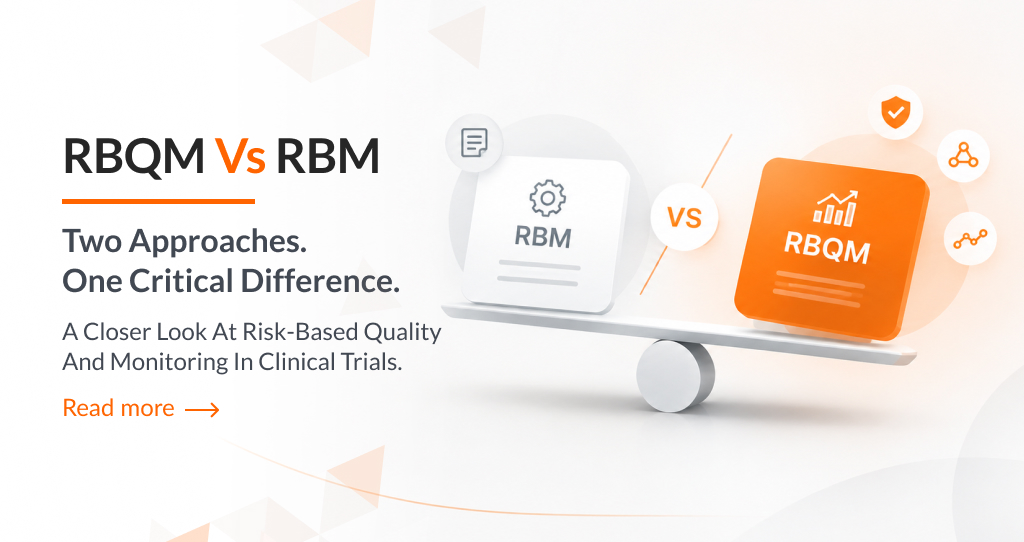
Risk-based quality management (RBQM) helps sponsors and CROs focus oversight on risks that matter most to participant safety and the reliability of trial results.
AI/ML can potentially strengthen this approach by helping teams examine patterns across relevant data and operational indicators. Depending on data availability and model validation, these insights may support the identification of unusual trends, emerging issues, or areas requiring closer investigation.
When combined with risk-based monitoring and established quality processes, intelligent analysis can help teams prioritize attention instead of treating every issue as equally significant.
Octalsoft's eClinical ecosystem supports the broader operational context in which risk-based decision-making takes place. The objective is to help teams connect risk signals with the workflows and evidence needed to assess them.
3. More Connected Clinical Operations Through CTMS
A Clinical Trial Management System provides visibility into study milestones, site activities, monitoring, and operational progress.
When operational information is accessible alongside relevant clinical data, teams can better understand how emerging issues may affect study execution.
AI-assisted analysis can help highlight trends, summarize information, and support the prioritization of operational follow-up. For instance, an emerging pattern of unresolved queries or delayed site activities may warrant investigation before it affects downstream milestones.
These insights should be interpreted within the context of the study and validated against the underlying evidence. AI supports operational judgment; it does not replace it.
4. Smarter Document and Quality Workflows
Clinical trial documentation is essential for demonstrating that study activities have been conducted appropriately. Managing documents, versions, review processes, and quality events across a trial can create significant administrative demands.
Octalsoft's eTMF and QMS capabilities address important documentation and quality management needs within the clinical research environment.
AI-assisted document processing, classification, review support, and exception identification represent potential opportunities to make these workflows more efficient when implemented and validated for the intended use.
Combined with established document controls, permissions, audit trails, and review procedures, intelligent workflows can help teams manage information more consistently while preserving accountability.
5. Agentic AI and the Evolution of Clinical Trial Workflows
The next phase of enterprise AI extends beyond generating insights. Agentic AI systems can be designed to coordinate multi-step tasks, interact with approved tools, and support workflows within defined boundaries.
In clinical research, potential applications include preparing information for review, organizing follow-up activities, summarizing operational exceptions, and assisting with routine workflow coordination.
These capabilities require careful design. Access permissions, traceability, validation, escalation rules, and human approval are particularly important when AI interacts with regulated clinical processes.
The Role of Data Governance in AI-Enabled Clinical Research
Intelligent technology must operate within a framework that protects data integrity, participant confidentiality, and the reliability of clinical evidence.
Before introducing AI/ML into clinical workflows, organizations should evaluate data quality, system validation, privacy safeguards, model performance, access controls, and change management.
Key considerations include:
- Data integrity: Maintaining reliable, traceable, and appropriately controlled clinical records.
- Privacy and security: Protecting sensitive information through suitable access controls and safeguards.
- Transparency: Ensuring that important findings can be understood, evaluated, and documented.
- Human oversight: Defining which decisions require review or approval by qualified personnel.
- Model monitoring: Assessing performance, detecting potential drift, and reviewing outputs over time.
- Regulatory alignment: Evaluating applicable requirements, including GCP, electronic records and signature controls, and relevant privacy regulations.
AI-generated outputs should not automatically be treated as verified clinical facts. Organizations must establish suitable controls based on the intended use, risk, and regulatory context of each application.
A strong eClinical foundation helps organizations approach AI adoption with greater discipline and confidence.
What Clinical Data Leaders Should Look for at SCDM 2026
SCDM 2026 brings together the clinical data management community to exchange ideas about emerging technologies, evolving practices, and the future of clinical data.
For sponsors, CROs, and clinical data leaders evaluating AI/ML-driven eClinical solutions, several questions deserve attention.
Can the technology connect relevant clinical and operational information? Intelligence becomes more useful when it has appropriate context across the study lifecycle.
Does it improve an identifiable workflow? Organizations should define measurable objectives, such as reducing avoidable manual review, improving issue visibility, or prioritizing follow-up.
Are the outputs explainable and reviewable? Teams need sufficient context to assess findings and understand why an action may be recommended.
Can it operate within established governance controls? Validation, access management, auditability, privacy, and human oversight should be considered from the outset.
Does it fit the existing technology ecosystem? Integration, implementation effort, user adoption, and long-term scalability matter as much as the sophistication of an AI model.
These questions help shift the conversation from AI as a headline feature to AI as a practical contributor to clinical research.
Octalsoft at SCDM 2026: Connecting Data, Intelligence, and Action
At Octalsoft, we believe the future of clinical research depends on bringing data and intelligent technology closer to the decisions they support.
Our unified eClinical portfolio connects core clinical and operational capabilities, while our AI/ML direction focuses on opportunities to strengthen data quality, improve oversight, and support more informed workflows.
For clinical research organizations, this represents an important shift: from managing separate systems and disconnected information toward a more coordinated approach to clinical trial execution.
At SCDM 2026, we look forward to engaging with the clinical data management community on how connected data, responsible AI, and integrated eClinical technology can contribute to better-managed studies.
Whether your priority is improving data quality, strengthening risk-based oversight, simplifying documentation, or increasing operational visibility, the starting point is the same: reliable information, connected workflows, and technology designed around real clinical research needs.
Meet Octalsoft at SCDM 2026 — Silver Sponsor, Booth 18.
Explore our eClinical solutions and discover how an integrated platform can support your clinical research operations.
Request a demo: https://www.octalsoft.com/request-a-demo/
Frequently Asked Questions
What are AI/ML-driven eClinical solutions?
AI/ML-driven eClinical solutions use artificial intelligence and machine learning to support clinical research activities such as data quality review, pattern identification, operational analysis, and workflow assistance. Their value depends on the intended use, available data, validation, and appropriate human oversight.
How can AI improve clinical data management?
AI can help identify unusual data patterns, flag potential discrepancies, summarize information, and prioritize records or issues for review. These capabilities can complement established data management procedures and help teams focus their attention where it is most useful.
Why is integrated clinical data important for AI?
Integrated clinical data can provide broader context across clinical, operational, and quality workflows. With appropriate data access and governance, this context can help AI/ML systems produce more relevant insights than analysis based on isolated datasets.
How can AI support risk-based quality management?
AI/ML may help identify trends and potential risk signals across relevant study information. Clinical and quality professionals must assess these signals against established risk criteria and determine the appropriate follow-up.
What should sponsors and CROs consider before adopting AI in clinical trials?
They should evaluate data quality, system validation, privacy, security, model performance, transparency, regulatory obligations, integration requirements, and human oversight. The intended use and risk of each AI application should guide its controls.
Where can I learn more about Octalsoft's AI/ML-driven eClinical solutions?
Visit Octalsoft's AI/ML capabilities page or request a demo to discuss your clinical research technology requirements.
Octalsoft. One Platform. Complete Control. Intelligent Solutions.