inquiry@octalsoft.com


The Digital Shift in Clinical Operations
The rise of decentralized trials, adaptive designs, and global execution models has pushed clinical operation teams beyond the limits of spreadsheets and legacy tools. Digital maturity has moved from “nice to have” to a strategic business requirement.
Clinical research has transformed more in the past five years than it did in the previous two decades. Sponsor–CRO–site ecosystems now deal with real-time data flows, global regulatory constraints, remote patient engagement, and hundreds of operational checkpoints across every milestone. The traditional operational stack—email, Excel, and point solutions—was never built for this interconnectivity.
Industry benchmarks show that trial delays can cost $600,000–$8 million per day, and over 30% of delays stem from operational inefficiencies rather than science. Modern CTMS platforms directly eliminate this loss.
Why Legacy CTMS and Manual Systems Fall Short
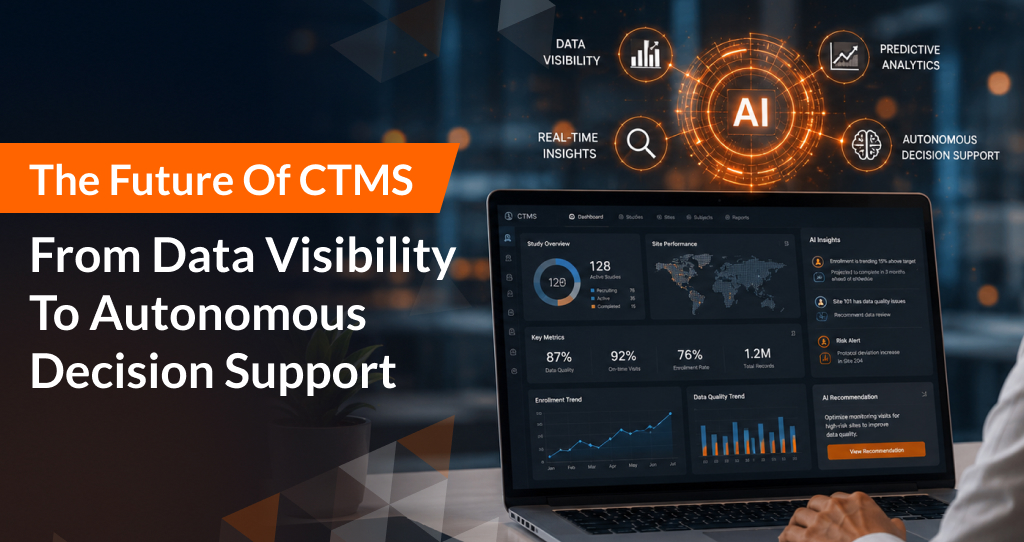
Legacy CTMS tools act as passive databases. Modern clinical operations need intelligent, real-time systems that orchestrate action—something manual tools and older platforms cannot provide.
Common failure modes of legacy systems include:
- Fragmented data trapped across multiple systems
- Lack of real-time reporting and predictive insights
- Manual site management and monitoring processes
- Poor configurability for complex protocols
- Limited support for decentralized and hybrid trials
Operational teams end up doing “system work” rather than managing the trial. This is why 70% of organizations are actively modernizing their operations stack.
Modern CTMS Adoption: The Business Case
A modern CTMS delivers financial and operational ROI by compressing cycle times, automating low-value tasks, and improving data quality—directly accelerating trial completion.
1. Operational Efficiency and Cycle Time Reduction
Automated visit tracking, monitoring schedules, document workflows, communication logs, and issue management save hundreds of hours per study.
Impact: Sponsors report 15–30% faster trial execution when replacing manual tracking with automated workflows.
2. Smarter Resource Utilization
Monitoring and site personnel account for 25–40% of total trial cost. A modern CTMS dynamically prioritizes sites, flags risk signals, and eliminates unnecessary on-site visits.
Impact: 20–45% reduction in monitoring overhead has become a typical benchmark.
3. Real-Time Oversight & Risk Prevention
Instead of discovering issues at close-out or audit, CTMS dashboards provide earlier visibility into:
- Deviations
- Missing visits or procedures
- Delayed documents
- Enrollment risks
- Safety trends (when connected to EDC)
Impact: Better risk control → fewer deviations → fewer audit findings → fewer costly delays.
4. Compliance by Design
Modern CTMS platforms provide systematic enforcement of:
- SOP and workflow adherence
- Regulatory documentation
- Training and delegation logs
- Version control and audit trails
This reduces human dependency and variability, supporting inspection readiness throughout the trial—not just before an audit.
Financial Impact: Where the Savings Really Come From
CTMS ROI is not abstract—it is tangible, quantifiable, and recurring across trials.
| Cost Driver | Typical Avoidable Loss | CTMS Value |
| Monitoring overhead | $500k–$2.3M per trial | Risk-based visit optimization |
| Enrollment delays | $600k–$8M per day | Predictive oversight and bottleneck alerts |
| Site underperformance | 25% sites under-recruit | Data-driven prioritization |
| Rework and documentation errors | 10–18% of trial hours | Automated workflows and version control |
Every study benefits from the same infrastructure, turning a one-time investment into long-term operational leverage.
Strategic Value: Beyond Cost Savings
A modern CTMS is an enabler of digital maturity across clinical development—supporting scalability, innovation, and sponsor–CRO–site collaboration.
Supports Decentralized and Hybrid Trials
Remote patient visits, home health scheduling, virtual monitoring, and telehealth coordination demand systemic backbone—something a CTMS provides.
Forms the Core of the Digital Clinical Platform
A CTMS is now expected to integrate seamlessly with:
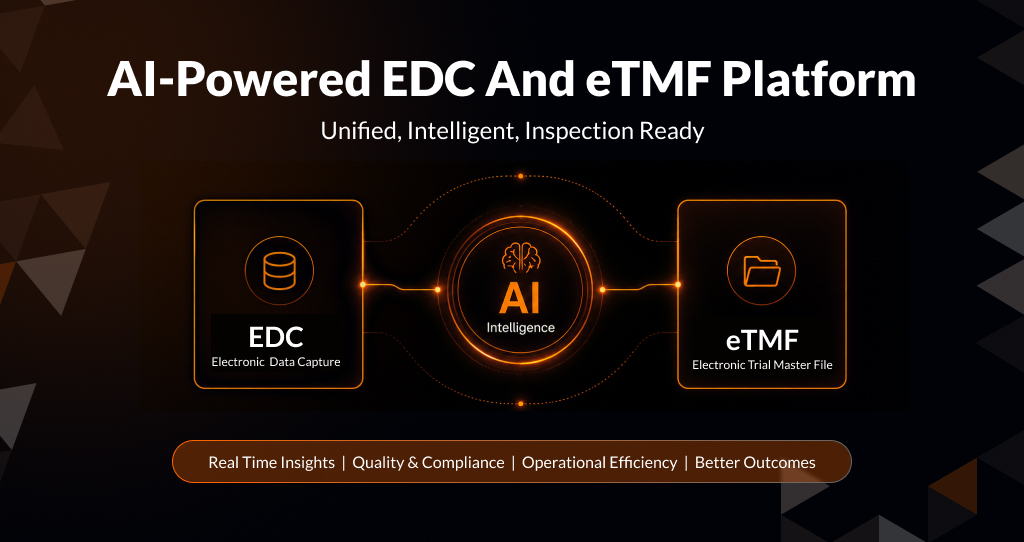
- EDC
- IWRS / RTSM
- eTMF
- eConsent
- Wearables / ePRO
- Safety systems
The result is a unified operational and data architecture.
Enables AI-Native Clinical Operations
Without structured operational data, AI cannot generate insights.
A CTMS is the foundation for:
- Predictive enrollment
- Intelligent monitoring allocation
- Resource forecasting
- Automated milestone risk scoring
What Modern CTMS Platforms Must Deliver
Selection criteria have shifted. Usability and configurability now matter more than long feature checklists.
A next-generation CTMS should deliver:
| Category | Expected Capability |
| Workflow | End-to-end trial orchestration with automation |
| Usability | Intuitive UI for sites, monitors & ops teams |
| Configurability | No-code protocol-specific tailoring |
| Integrations | Plug-and-play with EDC, IWRS, eTMF |
| Reporting | Real-time dashboards + predictive insights |
| Scalability | Support for hybrid and decentralized models |
| Deployment | Fast implementation + global support |
If a system requires months of training or external configuration, it is already outdated.
A Practical Roadmap for CTMS Adoption
CTMS modernization works best through phased, value-driven rollout—not a rip-and-replace approach.
Recommended adoption path:
- Start with study startup and monitoring workflows
- Expand to CRO and site collaboration
- Integrate with EDC and IWRS for real-time signal detection
- Scale across the study portfolio
- Layer on predictive analytics
Each phase unlocks visible business ROI before proceeding to the next.
The Bottom Line: Digitalizing Clinical Operations Is No Longer Optional
Sponsors and CROs that modernize with CTMS will execute faster, operate more efficiently, and scale more trials with the same resources.
A modern CTMS does not just digitize tasks—it transforms the operating model of clinical research:
- Less manual work
- Fewer operational risks
- Faster and more predictable study execution
- Higher scientific output per dollar of spend
In a competitive and cost-sensitive environment, this becomes a strategic advantage rather than an IT upgrade.
A Final Word
Organizations investing in modern CTMS platforms are not buying software—they are buying time, efficiency, and predictability across their clinical operations pipeline. As trials continue to scale in complexity, the gap between digital-first and legacy-first sponsors will widen dramatically.